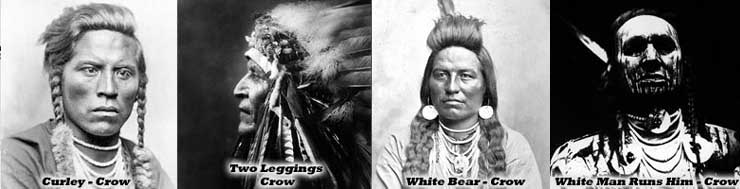
In
June 1876, a young warrior named White Swan was one
of six Crow scouts assigned to the 7th Cavalry. The
outnumbered Crow had aligned themselves with the U.S.
government against their traditional enemies, the Sioux
and Cheyenne, in exchange for a promise from General
George Armstrong Custer of a return to their old way
of life, and a return of land stolen from the Crow by
other tribes.
History
would have been altered had Gen. Custer followed the
advise of the Crow scouts who urged him not to lead
his forces into the valley of the Little Big Horn. In
the ensuing battle, White Swan was severely injured,
and after a long recovery, returned to Crow Agency seriously
disabled.
In
1894 White Swan, crippled and unable to hear or speak,
created a series of drawings on pages from an accounting
ledger book to explain his role in the famous battle
to his friend, the pastor at the Congregational Church.
— Billy Markland

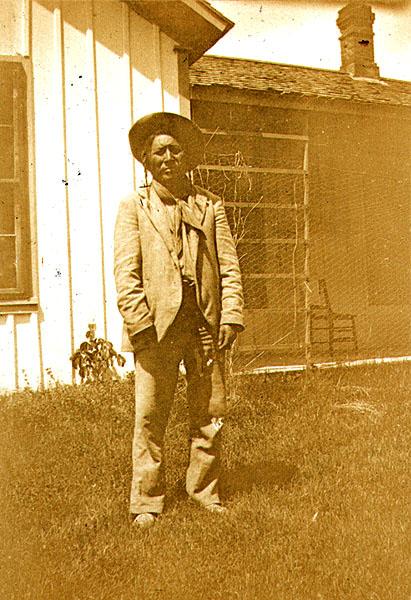
The
photo below is White Swan around 1899 taken at the Crow
Agency, Montana, by Arthur M. Tinker, an inspector for
the Indian Office and amateur photographer.
National Cowboy & Western Heritage Museum®
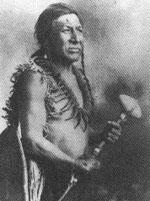
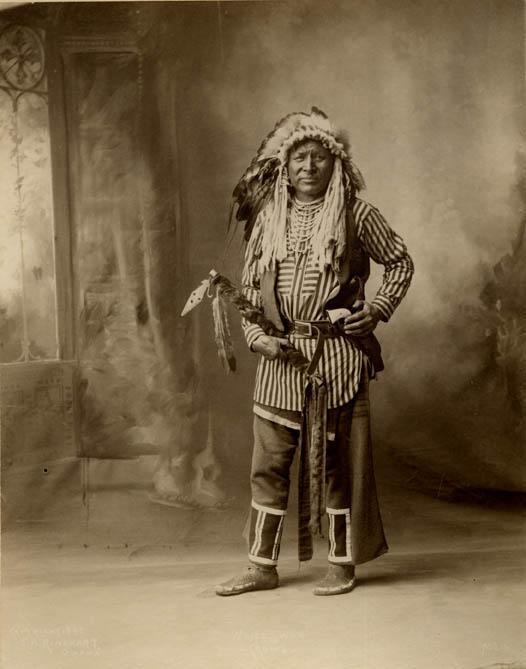
Another
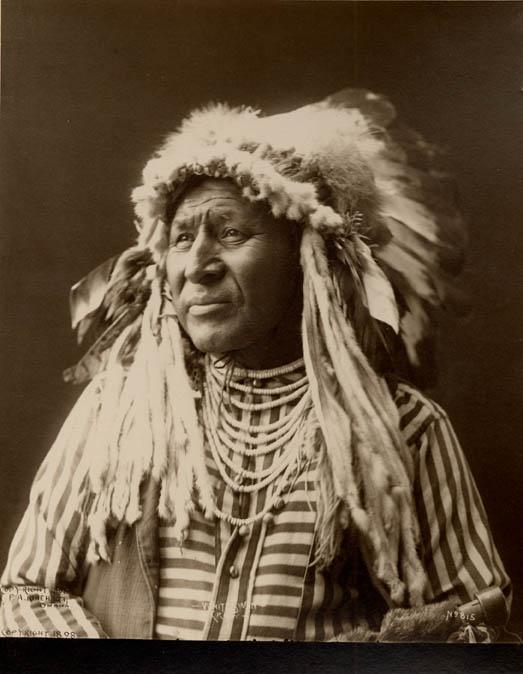
photo of White Swan holding his war club:
TMI number 00466
Photograph by F. A. Rinehart, 1898
© Omaha Public Library, 1998
TMI number 00467
Photograph by F. A. Rinehart, 1898
© Omaha Public Library, 1998
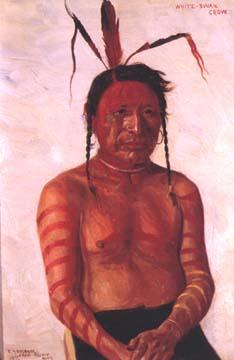
This painting of White Swan (done at the Crow Agency
in 1897) is by Elbridge Ayer Burbank.
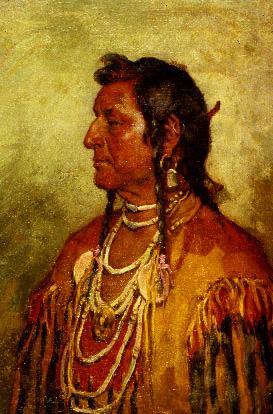
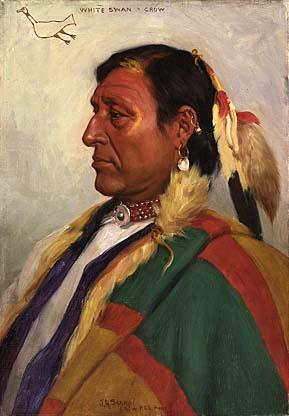
Joseph Henry Sharp (1859 - 1953)
oil on canvas
Sharp
moved to the West, establishing homes in Montana and
New Mexico, in order to live among the subjects he wanted
to portray. Buffalo Bill Historical Center, Whitney
Purchase Fund (18.61)
Photos above gathered by Grahame Wood.
White
Swan was at the battlefield with some of the survivors
of the LBH battle on June 25th 1886:
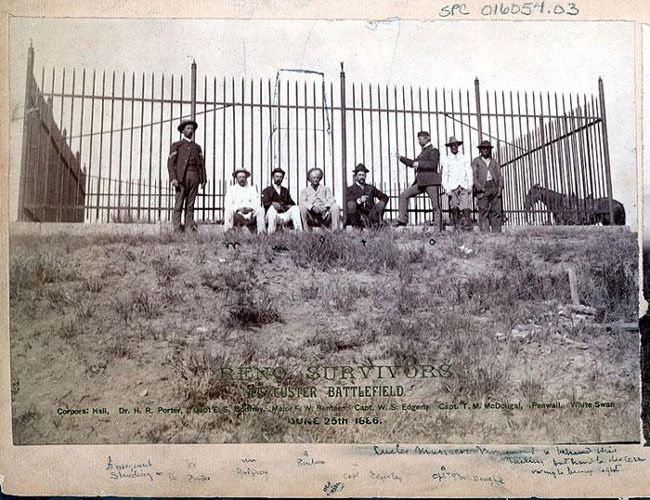
http://sirismm.si.edu/naa/4605/01605403.jpg
White Swan (right) detail from the LBH group photo:
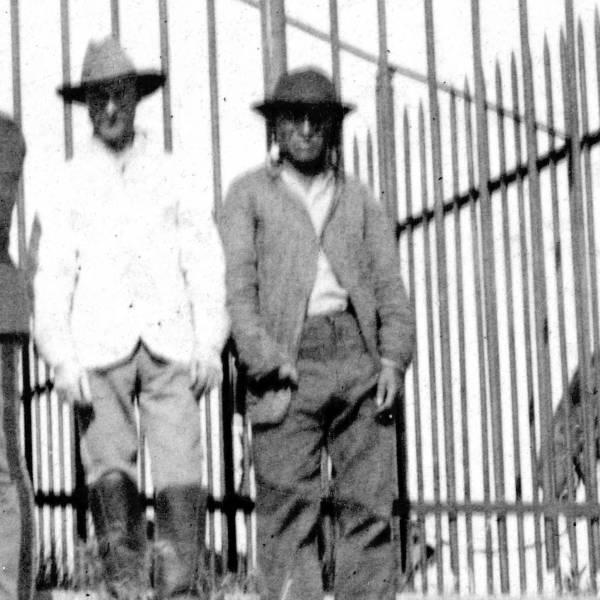
—Jinlian
According to the 1885 census, White Swan (whose name is there translated as "White Goose", Minatehash) was born in 1850 (while the 1900 census has him born in 1852) and is listed as living with a widowed aunt named Strikes By The Side Of The Water (who was, incidentally, mother of the other famous Custer scout Curley, which would make Curley and White Swan cousins) and a ten year old niece named Sits by The Hole. Thus would confirm the statement in White Swan's army pension file, in which it is said that his wife died in 1873 and he never remarried. In the 1900 census, White Swan/Goose is listed as "widowed" and only member of his household. The only other relative of White Swan was a half-sister (on father's side, therefore belonging to another clan) named Sage Woman.
According to Custer's Arikara scout Young Hawk (in The Arikara Narrative of the Custer Campaign by O. Libby), White Swan had another name, "Strikes Enemy".
Considering that his aunt was Curley's "mother" (which, in Crow kinship terms, could be the actual mother or a maternal aunt), White Swan should have belonged to Curley's clan, the Ashkepkawiia (Bad War Deeds).
White Swan died on August 12 1904. Even if some texts say that he's buried in the LBH battlefield area, there's no mark or grave there. More probably, he was buried in a traditional scaffold. As far as I know, he hasn't any direct descendant, unless one believes the story told to Joe Medicine Crow by a "white boy" in 1933 or so (H. Viola Little Bighorn Remembered: The Untold Indian Story of Custer's Last Stand) according to whom White Swan had a son from a clandestine relationship with a white nurse in a St. Louis hospital while recovering from the wounds received while fighting at LBH with Reno's troops. By the way, while some sources report White Swan being tended in a military hospital, I haven't found any reference about this particular hospital being in St. Louis.
According to military rolls, White Swan enlisted three times as army scout (2 in 1876 and 1 in 1877) - I don't know if he participated in the Nez-Percé campaign (among White Swan's own paintings, there's one showing him killing a Nez-Percé, but there are no signs of this happening during that campaign i.e. there's no symbol of the US army or images of white soldiers), but I wondered how a man as severely crippled as White Swan was (he had lost the lower half of his right hand, had his wrist deformed because of a badly fixed fracture and a permanent limp caused by a bullet in his thigh, not to mention the fact that his hearing was irreversably damaged and he was completely deaf by the end of the 1880s) was supposed to serve in the army.
Custer National Cemetery Guide (Visitor Center) is told that White Swan has been buried in section A of Custer National Cemetery in the grave number 460 (but there is not any mark on the grave stone).
—Jari
White Swan's grave at Little Bighorn IS marked.
http://farm4.static.flickr.com/3554/3558782484_6b3ab1de07_b.jpg
—wyman
Here’s a detailed report of White Swan's career as army scout (from D. Bradley,White Swan - Crow Indian Warrior and Painter, 1991)
Chronology of White Swan's scout career :
April 1876 -Enlists in Lt. J.H. Bradley's Detachment of Indian Scouts 7th Infantry Col J.Gibbon C.O., Crow Agency
June 1876 - together with Half-Yellow Face, Hairy Moccasin, Curley and White Man Runs Him detached from Bradley's command and assigned to Col. Custer's 7th Cavalry (Lt. Charles Varnum's detachment of Arikara scouts)
30 June 1876 - listed as "sick" on Muster Roll of Bradley's Scout - then transferred to Gen. Terry's column "awaiting futher orders".
September 1876 - Returns from detached service to Ft. Ellis, Montana. Honorably discharged from Lt. Bradley's Detachment of Indian Scouts
November 1876- Enlists in Lt. Hargrove's Detachment of Indian Scouts, 2nd Infantry on Musselshell River, Montana
February 1877 - Honorably discharged from Lt. E.W.Casey's Detachment of Indian Scouts 2nd Infantry, Tongue River Cantonment, Montana
October 1877 - Enlists in Lt. Tiffany's Detachment of Indian Scouts, 11th Infantry, Big Horn Post, Montana
May 1878 - Honorably discharged from Lt. Tiffany's Detachment of Indian Scouts, 11th Infantry, Fort Custer, Montana
June 1879 - Enlists in Lt. Rawolle's Detachment of Indian Scouts, 2nd Cavalry, Fort Custer, Montana - in the following months, listed on Lt. Hoppin's Detachment of Indian Scouts, 2nd Cavalry and in Lt. Kislingbury's Detachment of Indian Scouts, 11th Infantry.
December 1879 - Honorably discharged from Detachment of Indian Scouts, 11th Infantry at Fort Custer, Montana.
September 1880 - Enlists in Lt. Hopin's Detachment of Indian Scouts, 2nd Cavalry, Fort Custer, Montana, then detached to Lt. Kislingbury's 11th Infantry during an engagement with hostile Indians near the Musselshell
February 1881 - Listed on Muster Roll of Lt. Roe's Detachment of Indian Scouts 2nd Cavalry at Fort Custer
March 1881 - Honorably discharged from Lt. Roe's Detachment of Indian Scouts 2nd Cavalry at Fort Custer
—Jinlian
White Swan as remembered by Elbridge Burbank:
"Most white people assume that the Indians smear their war paint on indiscriminately, but the truth is that each daub has a significance, as does each feather an Indian wears. White Swan, for instance, wore three feathers in his hair. That denoted the number of wounds he had received in the Custer fight...White Swan also wore red stripes of paint around his arm, indicating the number of Sioux he had killed, and yellow ones for the Cheyennes.
"My best Indian account of the fight was from White Swan, another Crow, who had been a scout for Reno. After I had painted his portrait, White Swan agreed to show me over the battlefield. He was deaf and dumb, the affliction having been caused by the blow of a Sioux who had struck him over the head with a war club during a battle. So White Swan had to tell me about the Custer fight in the sign language and by drawing rude pictures illustrating features of the battle. One of the sketches showed a soldier trying to desert. White Swan explained in the sign language that Reno had sent him after this man. The sketch showed White Swan killing the soldier by striking him over the head. I came to the conclusion that he was bragging about his part in the Custer fight."
Was it really bragging? Here's what David Miller says about this accident in Custer's Fall: The Indian Side of the Story:
"In spite of a steadily mounting assault against his position, Reno had lost only one man aside from the Arikara scouts, most of whom were dead or missing. Sergeant Heyn of G Company had been shot through the chest during the change of front. Now the major saw he was about to lose another man-through desertion. A trooper was defying orders to hold fast and was making a run for it through the timber. 'Stop that man!" shouted Reno. "No man leaves this line, dead or alive, until I give the order!'
"White Swan, one of the two Crows with Reno, may have misunderstood. Or perhaps Bloody Knife, next to Reno, misinterpreted the major's words as an order for the Crow to overtake and kill the deserter, and passed it along as such in sign talk. At any rate, White Swan got up quickly and took after the trooper. Snaking his way through timber and brush, it did not take the scout long to run down the fugitive. The trooper's death cry as White Swan's knife plunged into him was lost in the din of battle. In a little while, the Crow quietly resumed his place in the line. Reno had his hands too full to notice what had happened."
White Swan did in fact paint this accident more than once.
—Jinlian
White Swan at LBH in various accounts:
From Custer in '76 - Walter Camp's Notes on the Custer Fight- interview with D. Lynch, 1908-1909:
When [Reno was] corraled [on the hilltop] Lynch saw White Swan, the Crow Indian scout, at one time when Sioux making charge, drag himself out [to the firing line] by grabbing the grass with hands and pulling himself along with his gun to get a shot at the Sioux. The men would then drag him back and in a little while would find him trying again to get out to skirmish line to fire at the Sioux. He was wounded 5 o 6 times and legs so badly wounded that could not use them.
The official reports speaks only of 3 wounds - it might be that, with all the heavy bleeding, Lynch believed that White Swan had been hit a few more times.
The Brave Bear (Cheyenne) episode may be placed a while after this one. From Indian Views of the Custer Fight by Hardoff, Brave Bear interview (1906):
Two Crow scouts of Custer [the other being Half Yellow Face, the "pipe carrier" of the Crow group who, along with White Swan , had gone with Reno because of a misunderstanding] came charging towards me. I also charged on them. When I got near them they both jumped off their horses and got on the sid of their horses so they could shoot better. Just then a lot of warriors rushed up to count "coup" on them , but I was first to count coup on one. This gave me a big honor or big name by counting first "coup" in the Custer battle.
Hardoff identified the "couped" Crow with White Swan - probably it was there where White Swan got his most severe wounds, including the shot-off hand. Brave Bear places the incident on the west side of the river, but Hardoff is quite positive that Brave Bear was mistaken in this and that it actually was the east bank of the river, where later White Swan was rescued by his fellow Crow Half Yellow Face and the Arikara scouts.
From The Arikara narrative of the Custer campaign by O. Libby, Young Hawk (Arikara) narrative:
(After Young Hawk and some of his companions, including the wounded Goose had sought refuge in a thick grove)...Just then Young Hawk saw Half Yellow Face crawling toward him. . He said "My friend is being killed, he's just on the edge of the thicket". Young Hawk went with him crawling on hands and feet to where the Crow scout lay on his back with his hands up. The two scouts took him by his arms and dragged him back to where Goose sat with his back against a tree. He was Strikes Enemy or White Swan (Crow). He told them he was not afraid and that he was glad he was wounded.
—Jinlian
White Swan had already counted "coup" before the LBH and therefore was considered a batse'tse (literally "good man" i.e. chief which anyway wasn't the same as camp leader). He and Half Yellow Face were the only ones among the Custer scouts to enjoy this status (Curley, White Man Runs Him and Hairy Moccasin were too young and, according to his wife Pretty Shield, Goes Ahead never counted "coup"). This should explain the general mourning in the Apsalooke camps when the news of the supposed death of White Swan and Half Yellow Face reached them.
—Jinlian
Pretty Shield (scout Goes Ahead's wife)'s account of Half Yellow Face (who was her father's brother ) and White Swan at LBH:
When Half-yellow-face and White-swan got back we heard their story, and it was like hearing the dead speak, because we thought they had been killed. They said that they had not understood, and had gone with the little chief [Reno] by mistake. They were with him until his men came to the big Lacota village, until the little chief's men got off their horses to shoot, and until one of the littler chiefs tried to get back onto his horse, and got dragged. He let his foot go clear through the stirrup, and his frightened horse ran away, dragging him. When Half-yellow-face and White-swan saw this they knew it was bad medicine. They saw how things were going to end, as anybody could; and then they ran to a hole in the hill. My man, Goes-ahead, showed me this hole, and so did my uncle, Half-yellow-face. . . .
The Lacota set the country afire to drive them out of the hole. It was here that White-swan got shot in the hand. His hand was never any good after that day. He was also shot in the foot and in the shoulder. But the bullet only burned his shoulder, making a bloody mark there that was not bad. They stayed in that hole, even when the smoke of the Lacota fire nearly smothered them, for two days and two nights; and some of the Arickara wolves were in there with them.
Finally the Lacota and Cheyenne left the Little Bighorn, and then the walking-soldiers came. Half-yellow-face said that they were very glad to see the walking-soldiers, because White-swan's wounds were swelling, and looked very bad, and because they all wanted to get something to eat.
Pretty Shield says that White Swan and Half Yellow Face spent 2 days and 2 nights before meeting with the remains of Reno's troops, while in Young Hawk's account of the fight that happened shortly after the end of the battle.
—Jinlian
According to Bradley, White Swan's limping worsened after 1891, when he broke his left leg falling from his horse.
Back to White Swan's family, I've read (in Bradley’s book) that his pension file also reported that his wife died in 1873 and he never remarried or had children. However, I recall having read that descendants of White Swan still live at Reno Crossing.
—Jinlian
Here are some more photographs of White Swan:
Four ones taken by Fred Miller between 1898 and 1904:
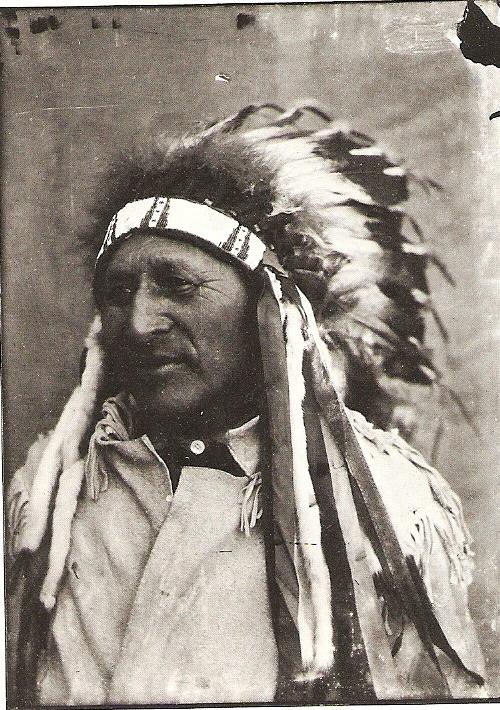
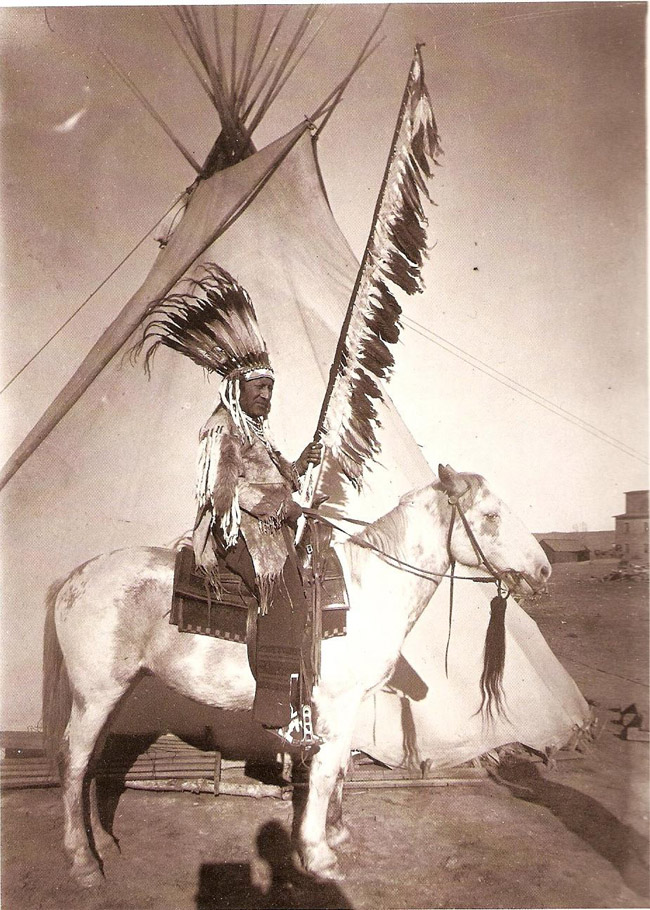
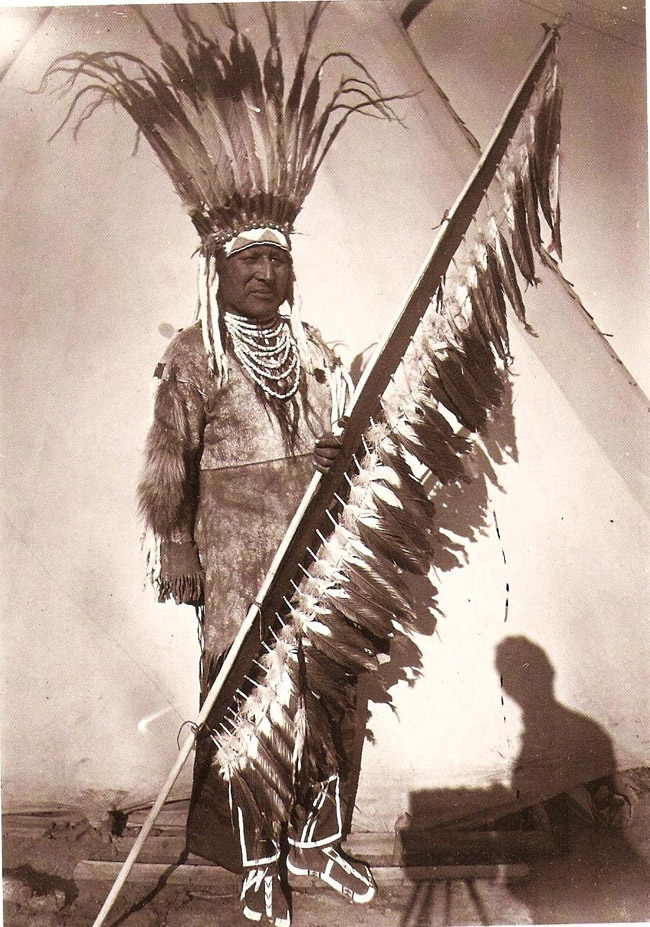
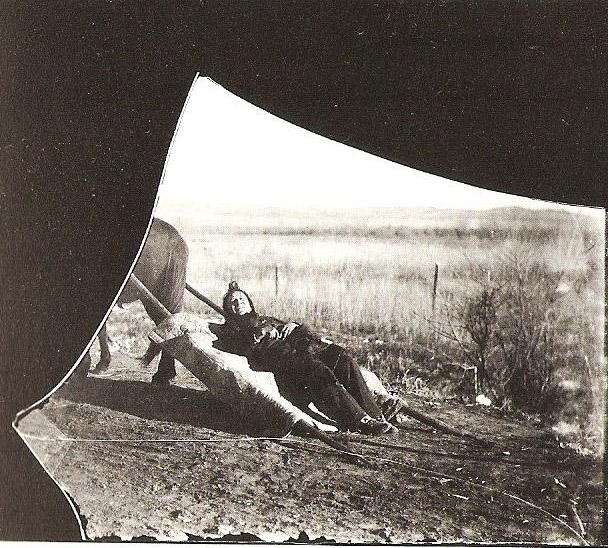
—Jinlian
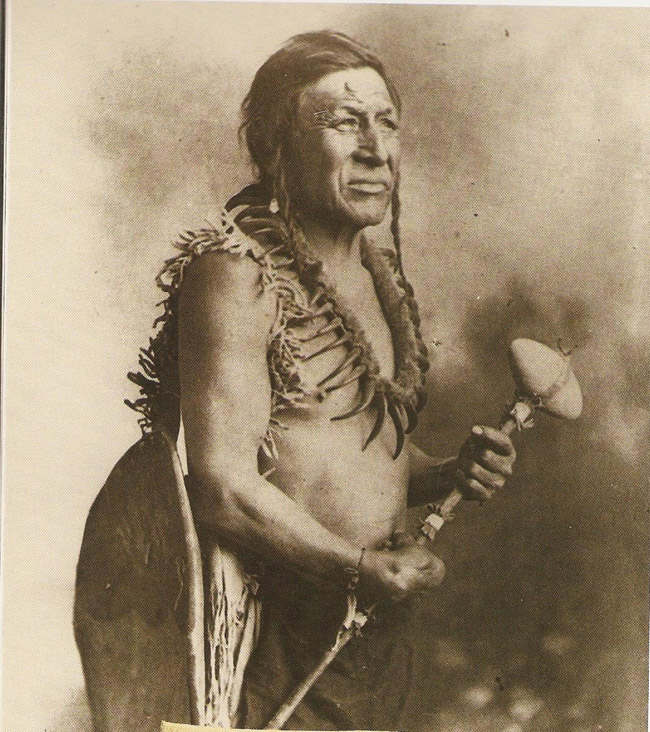
—Jinlian
White Swan (right) and Curley at the Sheridan Fair, 1903:
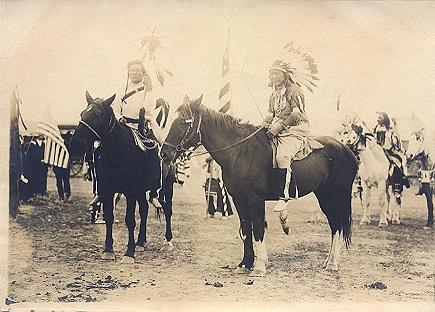
—Jinlian
A White Swan portrait by E. Seton (1897):
—Jinlian
White Swan's painting of the [Little Bighorn]:
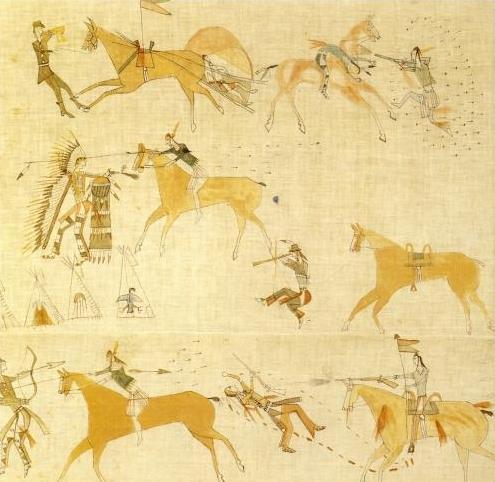
On the top left: White Swan, wounded, is carried away by travois. According to Hardoff, White Swan was wounded by Cheyenne warrior Brave Bear.
—Jinlian
Another photograph of White Swan (by Curtis?)
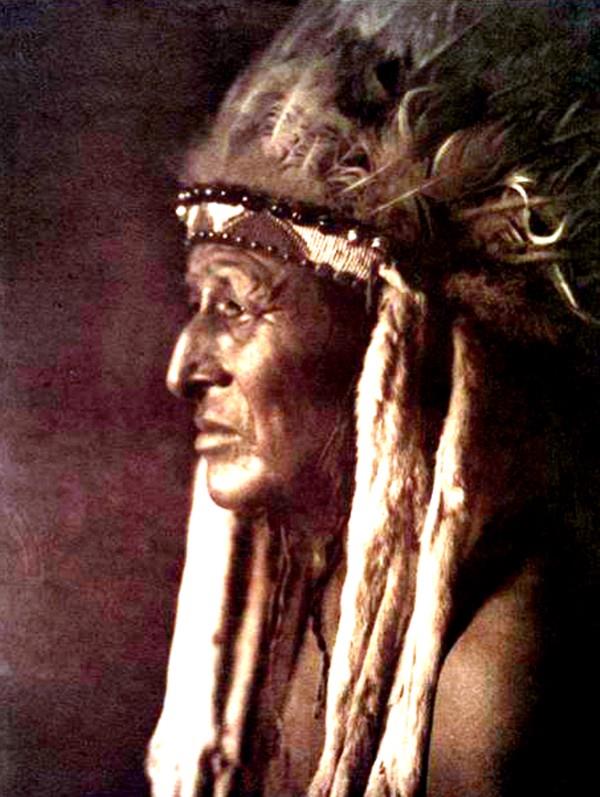
—Jinlian
White Swan (right) and Alexander Upshaw in front of the Custer Monument (1890s):
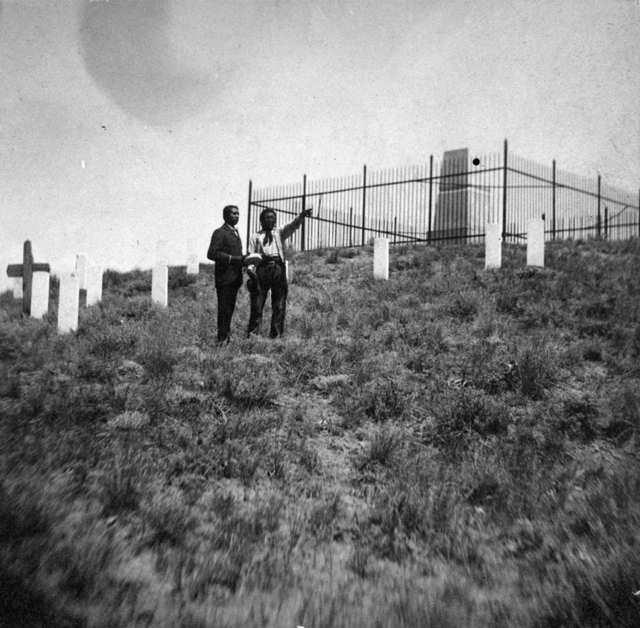
—Jinlian
White Swan by Chas Schreyvogel:
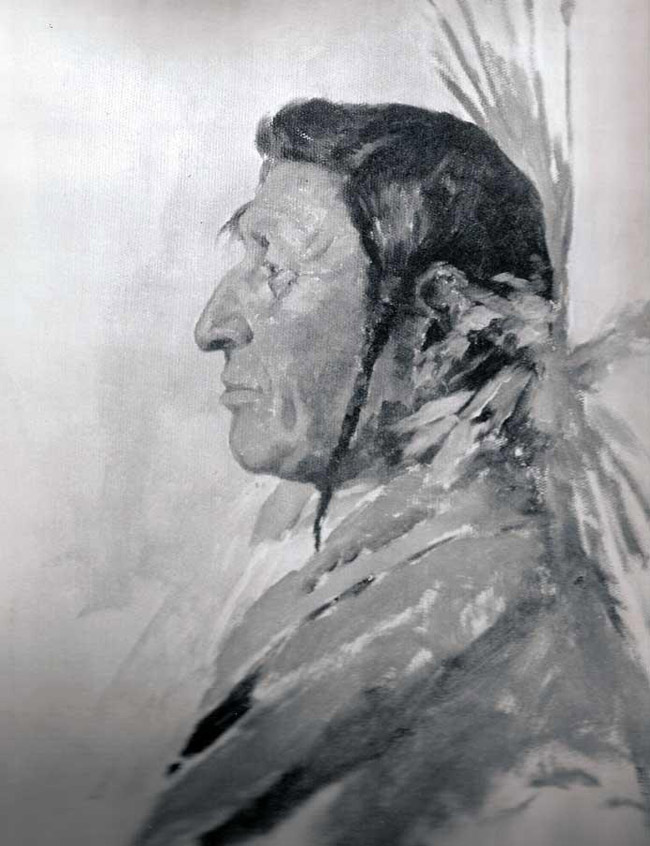
—Jari
Another Miller photograph of White Swan:
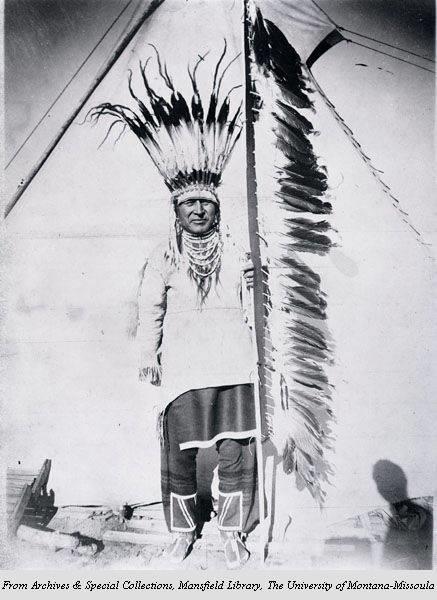
—Jinlian
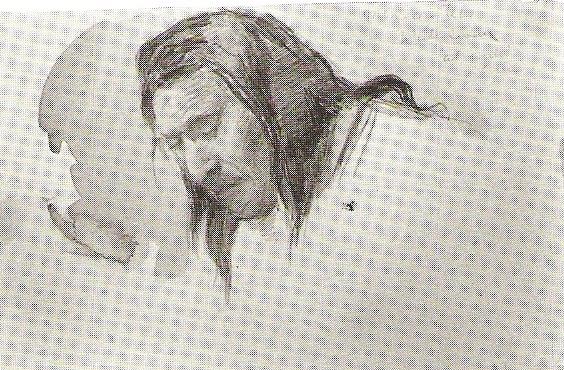
A [black and white] sketch of White Swan by Burbank:
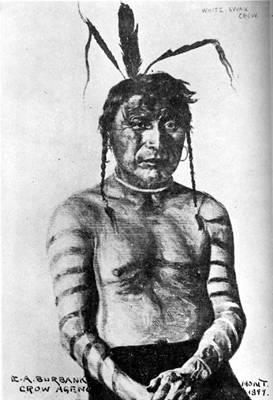
—Jinlian
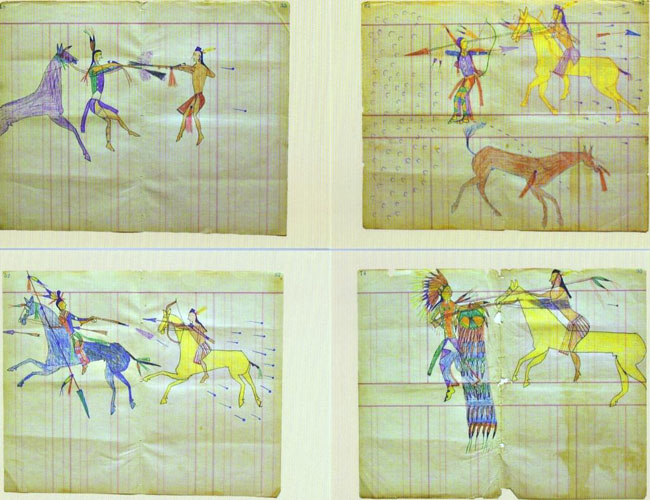
A few pictures of some of White Swan ledger drawings:
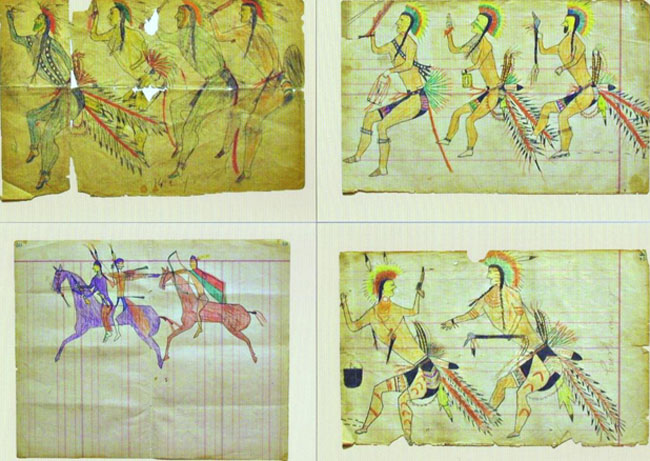
Top left: dancers performing the Hot Dance
Top right: dancers performing the Hot Dance
Bottom left: White Swan persuses two enemy indians on a horse
Bottom right:dancers performing the Feast dance in which canine stew was served
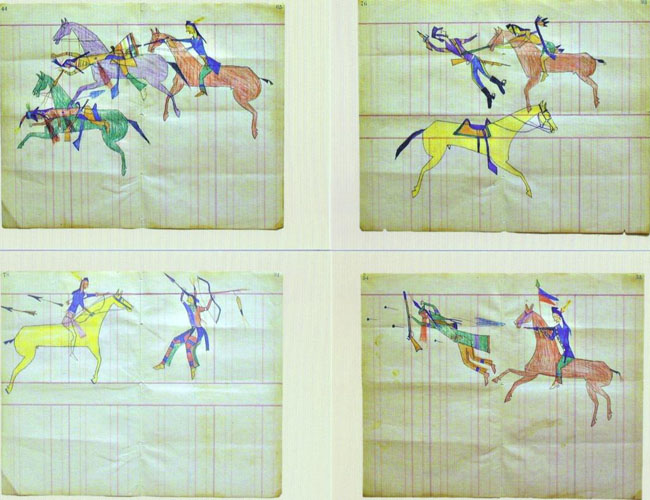
Top left: White Swan persuses and kills two enemy indians
Top right: White Swan is sent to retrieve an army deserter and shoots him
Bottom left: White Swan counts coup on his attacker who has shot several arrows who missed target
Bottom right:White Swan pursuses and kills an enemy warrior, while carrying the 7th Cavalry guidon
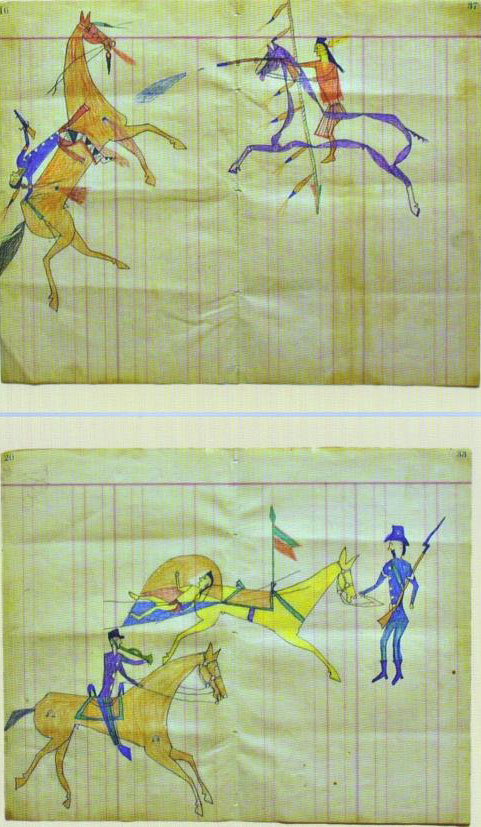
Top left: White Swan is now severely wounded in his right hand and leg by enemy gunfire and bleeding profusely
Top right: White Swan counts coup on the enemy, whose horse he has already killed
Bottom left: White Swan and enemy shoot at each other, but arrows and bullets have all missed
Bottom right: White Swan counts coup on Sioux warrior, as the Sioux shoots at him
Top: White Swan has killed the horse of his enemy and is firing again at the other indian
Bottom: The severely wounded White Swan is rescued by his fellow scouts, who fabricated a travois.
— Henri
The photo and the extract below are from ”Little Bighorn Remembered” by Herman J. Viola.
“Documents found in White Swan’s personnel file in the National Archives of the United States. The two bullet wounds in his right leg are clearly marked, as is the severe injury to his right hand."
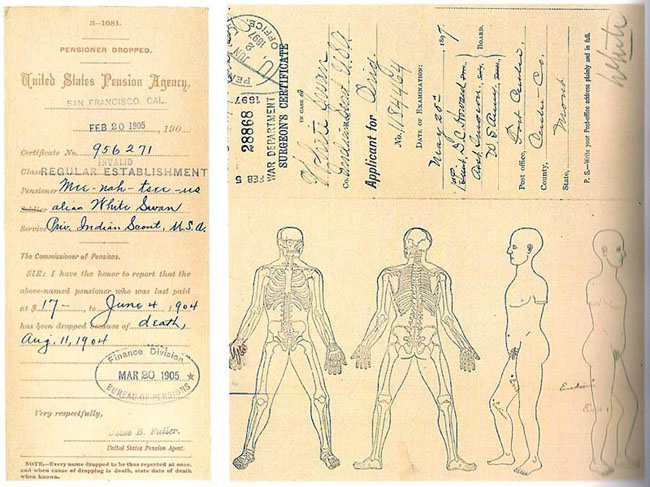
— Jari
White Swan, sketch by J.H. Sharp:
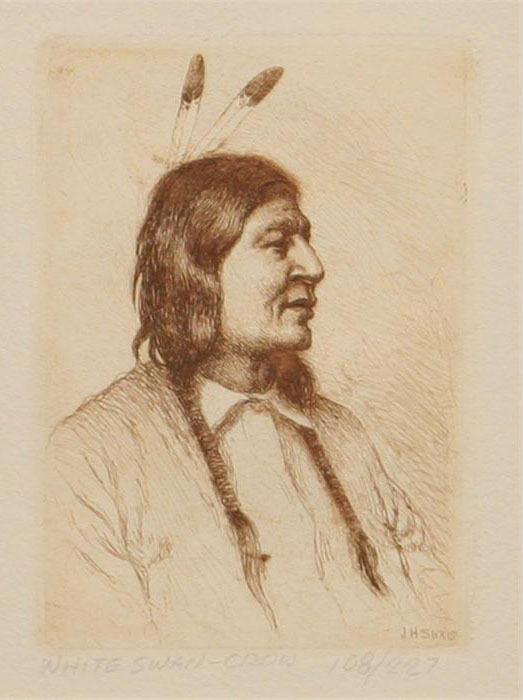
—Jinlian
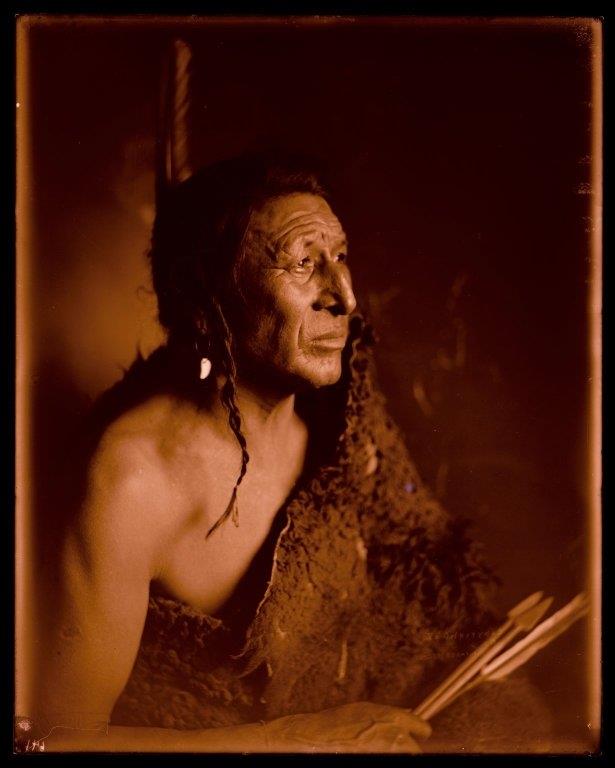
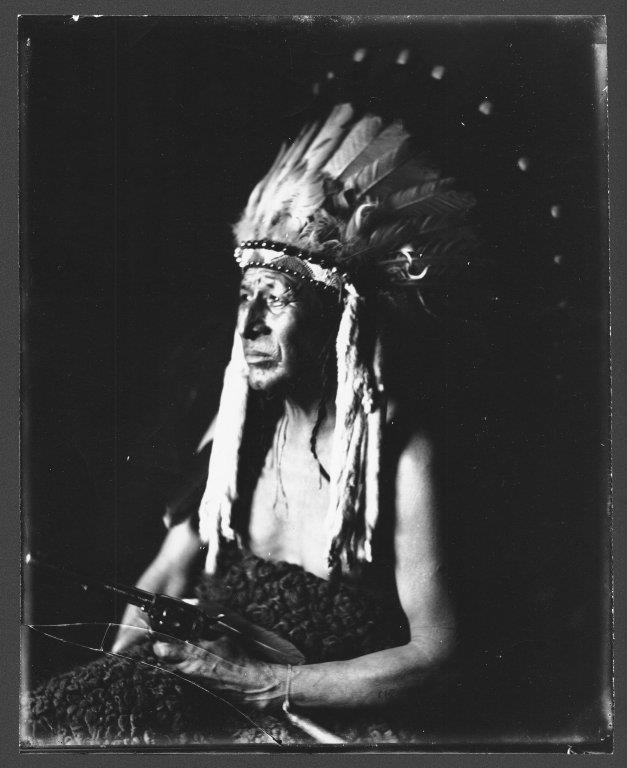
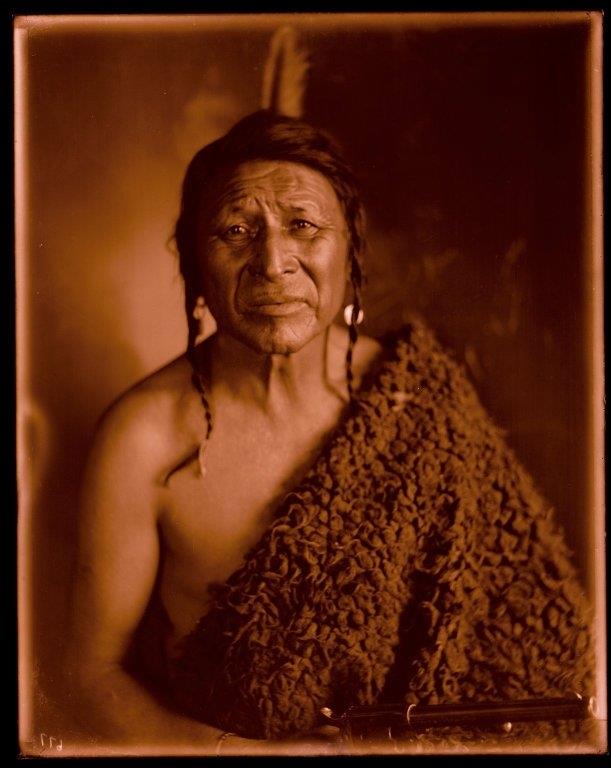
Three portraits of White Swan by Throssel (early 1900s) – these images come from the UOW Archives, Richard Throssel Collection:
—Jinlian
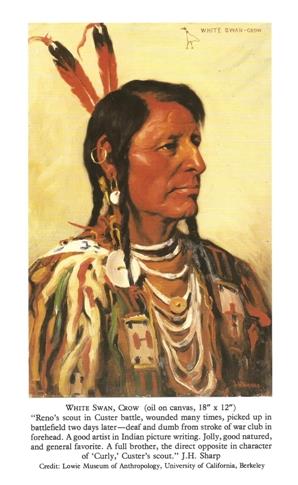
Another White Swan portrait by J.H. Sharp (from J. H. Sharp among the Crow Indians, 1902-1910: Personal Memories of His Life and Friendships on the Crow Reservation in Montana by C. Reynolds Riebeth)
—Jinlian
Another Sharp painting of White Swan, ca. 1900:
— Grahame Wood
The following publications contain information about White Swan:
Article: "Custer's Crow Scouts" • Morgan City Review • 25 October 1922.
Article: "Was It Only Custer's Folly?" by Carl W. Breihan • Golden West: True Stories of the Old West • Vol. 4, No. 5 • July 1968.
Article: "Burying the Hatchet" by Douglas C. McChristian • In June 1926, on the 50th anniversary of the Little Bighorn battle, some 50,000 people attended the memorial events of that summer • Greasy Grass, Annual of the Custer Battlefield Historical & Museum Association • Vol. 18 • May 2002.
Back to the Top